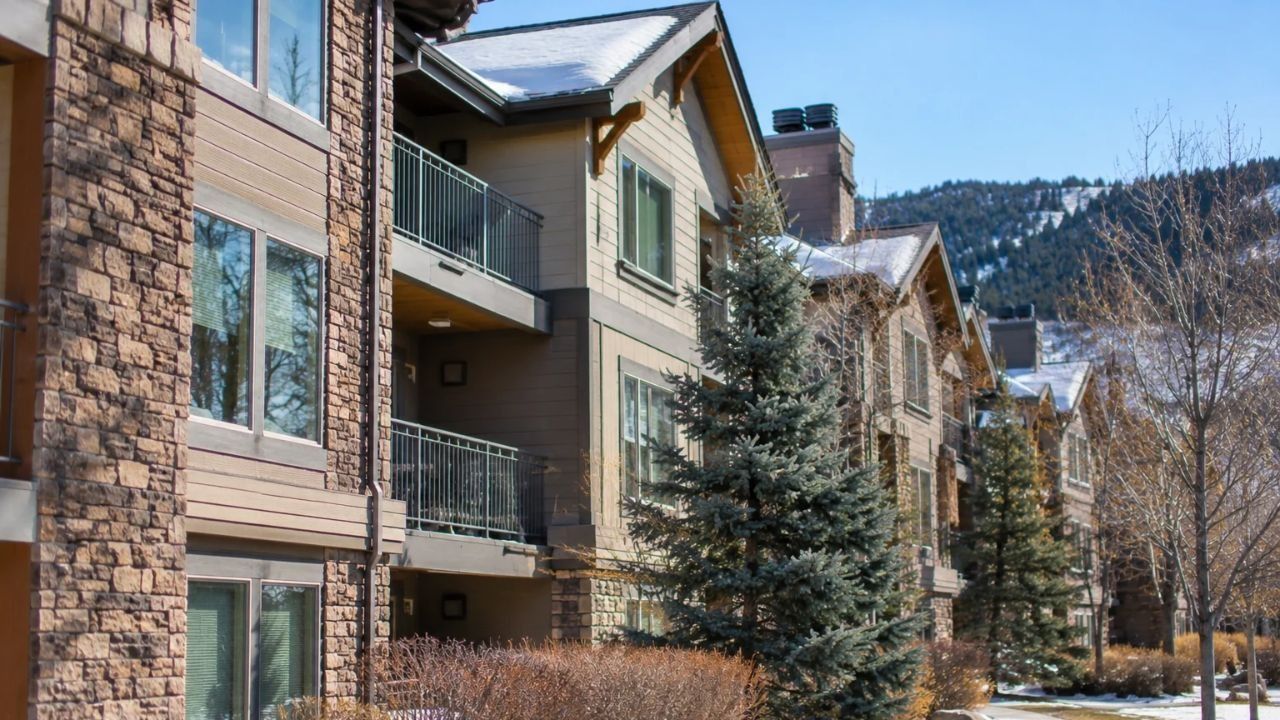
Colorado Condo Board Directors and Officers Insurance
9:00am - 5:00pm Mon-Fri
We'll Reply in 15min*
Picture a Thursday night board meeting in a Lakewood condo building. The board approves a $4,800-per-unit special assessment to replace failing balconies. Three weeks later, a group of owners hires an attorney, alleging the vote was improperly noticed and the bids were steered to a board member's brother-in-law.
None of those volunteers took a dime for serving. Every one of them is now a named defendant.
That's the scenario
directors and officers coverage exists for, and it plays out across Colorado more often than most boards expect.
Condo boards make decisions that affect owners' money, homes, pets, parking spots and solar panels. When owners disagree strongly enough, those decisions turn into demand letters and lawsuits. This guide covers how D&O insurance for Colorado condo boards responds to disputes over board decisions, discrimination, elections and assessments. It also explains the exclusions that catch boards off guard and how claims actually get filed.
The Critical Role of D&O Insurance for Colorado Condo Boards
D&O insurance pays defense costs, settlements and judgments when a board member is accused of a "wrongful act" in their role. That term usually covers errors, omissions, misstatements, neglect and breach of duty. For condo associations, it typically covers current directors, former directors, officers, committee members and often the association itself as an entity.
The key point most boards miss is that defense costs are the real exposure. Many owner lawsuits against boards never produce a large judgment. They still generate five-figure legal bills just to get through discovery and mediation. Without D&O, those bills land on the association's operating budget or, in a worst case, on individual volunteers.
Colorado adds its own pressure. Under HB25-1123, associations must follow a mandatory dispute resolution sequence, including direct negotiation and then formal mediation, before a lawsuit can be filed. That's helpful for cooling disputes. The catch is that it also means legal costs start accruing earlier, during negotiation and mediation, so you need a policy that recognizes pre-suit proceedings as a "claim."
Here's what that means for you when reviewing a policy:
- Check the "claim" definition. It should include written demands, administrative charges and mediation requests, not just filed lawsuits.
- Confirm who's insured. Former board members, committee volunteers and employees should be included.
- Look at entity coverage. The association itself gets sued alongside individual directors, often in the same complaint.
- Ask about the managing agent. Some policies extend coverage to the management company for acts done on the board's behalf.
Colorado's Common Interest Ownership Act sets fiduciary expectations for boards. D&O is how volunteers meet those expectations without betting their personal savings on every vote.

By: John Jacquat
Founder & President
Protecting Board Decisions and Governance Actions
Most D&O claims against condo boards don't involve fraud or dramatic misconduct. They involve ordinary governance choices that some owners dislike. A board denies an architectural request, enforces a rental cap, fines an owner for a noise violation or picks one roofing contractor over another. Any of those can trigger a claim.
The legal standard many boards rely on is the business judgment rule. Courts generally defer to board decisions made in good faith, with reasonable information and without conflicts of interest. That said, the rule is a defense, not a shield against being sued. You still have to pay lawyers to raise it, and that's precisely where D&O earns its premium.
New 2026 legislation expands the list of decisions that can be challenged. As of August 12, 2026, Colorado law prohibits HOA boards from unreasonably restricting portable solar devices under HB26-1007. A board that rejects an owner's balcony solar panel based on an older aesthetic rule could face a statutory claim. Expect that "unreasonably" to be argued over for years.
Management transitions are another source of claims. Starting August 12, 2026, outgoing management companies must return all association records and funds within 45 days or face a $250 per business day penalty. If your board drags its feet enforcing that, owners may argue the directors failed to protect association assets. Document every request you make to an outgoing manager.
Managing Fair and Legal Board Elections
Election disputes are personal, which makes them nasty. Owners who lose a seat, or whose candidate loses, often allege improper notice, mishandled proxies, ballot counting errors or a board that changed rules to protect incumbents. Colorado law requires secret ballots in contested elections and sets procedures that many smaller associations follow loosely at best.
D&O policies generally cover defense of election challenges because they arise from governance acts. The weak spot is usually the remedy. If a court orders a new election, the cost of holding that election isn't a covered "loss" on most policies. Neither are the costs of complying with an injunction.
You reduce election claims with process discipline:
- Send notice within the timeframe your declaration and bylaws require, and keep proof of delivery.
- Use a neutral party, such as the manager or a volunteer non-candidate, to collect and count ballots.
- Keep ballots for the period your records policy requires.
- Never adopt election rule changes during an active campaign.
Defending Challenges to Special Assessments
Special assessments generate more angry owner letters than almost any other board action. A five-figure per-unit bill for a roof, siding or a deferred elevator replacement hits retirees and investors equally hard. Owners challenge the vote, the bid process, the reserve study behind it or whether the board followed declaration limits.
D&O will typically defend the board against claims that it breached its duties in approving the assessment. One thing to keep in mind is that D&O won't pay to reverse the assessment, refund it or fund the underlying repair. Those are not insured losses. The policy pays to defend the decision, not to undo the financial consequence of it.
Construction defects deserve a separate note. Under the Colorado American Dream Act, HB25-1272,
owner approval to start a construction defect lawsuit rose to 65% of all allocated votes. Boards that push assessments to fund repairs instead of pursuing a builder sometimes face owner claims that they should have sued. Keep detailed minutes explaining why you chose the path you did.
Fair housing claims are among the most expensive D&O exposures for condo boards. They can come through the Colorado Civil Rights Division, HUD or a private lawsuit, and they often involve attorney fee-shifting. A denied reasonable accommodation request for a parking space, a ramp or an assistance animal can produce a claim that costs more to defend than many balcony replacements.
Colorado tightened this area in 2026. Effective August 12, 2026, HB26-1045 makes prohibiting assistance animals a presumed discriminatory housing practice and requires a good faith interactive process before denying an accommodation. That shifts the burden. Your board's old "no dogs over 25 pounds" rule won't hold up against an accommodation request just because it's in the declaration.
Here's what that means for you in practice. A board member who emails back "our rules don't allow animals, sorry" may have just handed an owner a presumption of discrimination. Train every director, and your manager, to route accommodation requests into a documented process instead of answering them informally.
Coverage questions to ask your broker:
- Is discrimination expressly covered? Some association D&O forms include it, while others exclude or sublimit it.
- Are administrative proceedings covered? A Civil Rights Division complaint should qualify as a claim.
- Are the claimant's attorney fees covered? Fee awards can exceed your own defense costs.
- Is non-monetary relief defended? Many fair housing claims seek policy changes plus damages.
The common client mistake we see is assuming general liability handles discrimination. It usually doesn't, which is why the D&O wording matters so much here.
Understanding Common D&O Policy Exclusions
Every D&O policy has exclusions, and the condo-specific forms differ more than boards realize. Two policies with the same $1 million limit can respond very differently to the same claim. Reading exclusions before a dispute begins is far cheaper than discovering them after a denial letter arrives.
Common exclusions in association D&O forms include prior and pending litigation, claims between insureds, pollution, ERISA, and claims already noticed under a prior policy. The "insured vs. insured" exclusion deserves attention because condo disputes sometimes involve a former director suing the current board. Good association forms carve that scenario back in. Weaker forms don't.
Timing exclusions matter just as much. Most 2026 Colorado D&O policies are written on a claims-made basis, so the policy in force when the claim is reported handles it, not the policy in force when the decision was made. If you switch carriers, confirm the new policy's retroactive date reaches back far enough. Otherwise, a 2024 assessment vote challenged in 2026 could fall into a gap.
Property Damage and Bodily Injury Carve-outs
D&O policies almost always exclude bodily injury and property damage. The logic is that those claims belong on the general liability and property policies. The trouble starts when a claim blends both.
Take a common Colorado scenario: an owner sues because the board delayed fixing a roof leak, and water damaged their unit. The physical damage falls outside D&O. The allegation that directors breached their duty by delaying repairs may still be defended, depending on whether the exclusion uses "arising out of" or "for" language. "Arising out of" wording is broad and can kill coverage for the entire claim.
Wildfire risk adds a fresh angle. Starting October 1, 2026, Colorado insurers must disclose wildfire risk scores and the mitigation actions that could lower premiums. Boards in the foothills that ignore those recommendations could face owner allegations of mismanagement. The fire damage itself won't be a D&O matter, but the governance decision might be.
Breach of Contract and Dishonest Acts
Breach of contract exclusions stop D&O from paying what the association already owes under a contract. If you terminate a landscaping vendor early and owe the remaining contract balance, D&O won't cover that. Many association forms still defend the contract claim, even if they won't pay the damages. Ask your broker which approach your form takes.
Dishonest and fraudulent acts are excluded too, but the wording matters. Strong policies apply this exclusion only after a "final, non-appealable adjudication" proves the dishonesty. That means the carrier defends the director until a court actually rules. Weaker forms let the carrier deny based on allegations alone.
Also check for severability. If one director embezzled, a severable policy protects the innocent directors who had no knowledge. Theft of association funds itself is a crime and fidelity bond issue, not D&O.
Comparing D&O to General Liability Insurance
Boards often believe their master policy's general liability section covers "lawsuits." It covers some lawsuits. The two coverages protect against different risks, and the gap between them is where uninsured claims happen.
| Issue | General Liability | D&O |
|---|---|---|
| Owner slips on icy walkway | Covered | Excluded |
| Owner challenges special assessment | Not covered | Covered (defense) |
| Fair housing complaint | Usually not covered | Often covered, check form |
| Fair housing complaint | Usually not covered | Often covered, check form |
| Fire spreads from common area | Covered | Excluded |
| Vendor contract dispute | Not covered | Defense may be covered |
| Coverage trigger | Occurrence | Claims-made |
The trigger difference is the one people forget. General liability usually responds based on when the injury occurred. D&O responds based on when the claim is made and reported. That's why a lapse in D&O, or a sloppy carrier switch, can leave past board decisions uncovered.
On the flip side, both coverages work best together. A single owner lawsuit can include a bodily injury count and a breach of fiduciary duty count. You want both carriers notified and coordinating, not pointing at each other while your board pays the attorney.
Step-by-Step Guide to Filing a D&O Claim
The biggest mistake boards make with D&O claims is waiting. Directors assume a demand letter will blow over, or they try to resolve things themselves first. Claims-made policies have strict reporting requirements, and late notice is one of the most common reasons carriers deny coverage.
Follow this sequence when a dispute surfaces:
- Recognize a potential claim early. A written demand for money, a request to mediate, an attorney letter or an administrative charge typically counts. Under HB25-1123's required negotiation and mediation steps, disputes often become "claims" well before a lawsuit is filed.
- Notify your broker in writing immediately. Send the demand letter, the relevant minutes and a short timeline. Don't wait for the next board meeting.
- Don't admit liability or promise settlements. Most policies prohibit settling without carrier consent. A director who offers a refund in an email can jeopardize coverage.
- Don't hire counsel before talking to the carrier. Many policies use panel counsel or require approval. Fees incurred before notice may not be reimbursed.
- Preserve records. Keep minutes, ballots, emails, text messages and management correspondence. Board members' personal email accounts count too.
- Report circumstances, not just claims. If you know owners are organizing against a decision, many policies let you report a "notice of circumstances," locking in coverage under the current policy.
- Track the retention. Your deductible applies before the carrier pays. Budget for it.
This matters because coverage disputes often turn on timing, not merits. A board that reports early almost always gets a better result than one with a stronger defense that reported late.
Common Questions About Colorado Condo D&O Coverage
Does Colorado require condo associations to carry D&O insurance? Colorado's common interest statute focuses on property and liability coverage, but your declaration may require D&O. Most lenders and management companies expect it anyway, and finding volunteers without it is hard.
How much D&O coverage does our condo board need? Many associations carry $1 million, while larger buildings or those with active disputes often carry more. Base the limit on your unit count, litigation history and fair housing exposure, not on last year's renewal.
Will D&O pay if owners sue us over a special assessment? It typically pays to defend the board's decision. It won't refund the assessment or pay for the repair itself.
Are we covered if an owner files a complaint about an assistance animal? Only if your policy covers discrimination and administrative proceedings. With HB26-1045 in effect, confirm this before renewal.
What happens to coverage if we switch insurance companies? Check the retroactive date on the new policy. A gap can leave past board decisions uncovered under the claims-made trigger.
Does D&O protect former board members? Good association policies do. Confirm your definition of "insured" includes past directors and officers.
Making the Right Choice for Your Community
Board service in Colorado now comes with more statutory tripwires than it did even two years ago. Solar device rules, assistance animal presumptions, mandatory dispute resolution and the 45-day records deadline all took effect or got tougher in 2026. Each one creates a fresh way for an owner to allege that the board got it wrong.
The right D&O policy defends ordinary governance choices, covers discrimination and administrative claims, and handles mediation as a claim. It also limits fraud exclusions to final adjudication and keeps a clean retroactive date. Price matters less than wording here. A cheap policy with "arising out of" exclusions and no fair housing coverage can cost your community far more than it saves.
Your next steps are simple. Pull your current declarations page and policy form before your next meeting. Have your broker answer the coverage questions above in writing. Then train every director to report potential claims early, because the best policy in the state can't help a board that waits too long to use it.
ABOUT THE AUTHOR:
John Jacquat
As President of Pure Risk Advisors, I’m dedicated to helping clients protect what matters most through clear, personalized insurance solutions. Since 2009, my focus has been delivering trusted coverage and guidance for individuals and businesses across Colorado and beyond.
The Pure Risk Process
Process of Working With A Business Insurance Agent in Colorado

Risk Analysis & Tailoring
Embark on a meticulous exploration of your business's unique vulnerabilities and aspirations. Pure Risk Advisors goes beyond mere coverage, ensuring you're equipped with solutions finely tuned to Colorado’s distinct business landscape.

Strategic Business Consultation
Dive deep into a strategic session with our seasoned specialists. By delving into your business model, aspirations, and challenges, we align our insurance recommendations not just to protect but to propel your business forward, keeping in mind Colorado’s intricate regulatory environment.

Swift Policy Integration
Upon discerning the optimal protection strategy, we streamline the activation process. Partnering with Pure Risk Advisors means more than just business insurance – it's about securing your enterprise's future with unmatched diligence and expertise in Colorado.
Pure Risk Advisors Team
Meet Our Colorado Professional Team Members
Meet the heart and soul of Pure Risk Advisors: our exceptional team. Each individual has been meticulously selected not just for their deep-rooted industry knowledge, but for their passion and commitment to genuinely serve our clients.
We pride ourselves on forging more than just business transactions; we build relationships. Our team doesn't see you as just another policy number. Instead, they view every interaction as a partnership, crafting solutions that resonate with your unique needs.
Dive in, get to know us, and discover firsthand why our team makes all the difference.




Client Testimonials
Amazing Feedback About Pure Risk Advisors


In today’s insurance marketplace, innovation and originality are important - but unless they’re accompanied by integrity and personalized service, they do little to accomplish a club owner’s goals. ACE National is proud to recognize John Jacquat and his company, Pure Risk Solutions, as one of our top-ranked premier industry providers. John has consistently mastered achievement in leadership, creating the best product for a client’s needs and following through on his word. I can recommend Mr. Jacquat without reserve if you’re in the market for club insurance.
Angelina Spencer
Executive Director of Ace National
Business Insurance Coverage in Colorado
Commercial Insurance Options
Business Owner's Policy
Coverage for property damage, liability, and business interruption combined.
General Liability Insurance
Protects against business liabilities like bodily injury and property damage.
Workers' Comp. Insurance
Covers employee injury costs, ensuring business and worker protection.
Professional Liability Insurance
Guard against professional mistakes, negligence, or services rendered failures.
Commercial Property Insurance
Broad protection against business-related injuries or property damage claims.
Commercial Auto Insurance
Coverage for business vehicles against damage, injury, or liability.
We've been serving Colorado Business Since 2009
Industries Served
Latest News & Blog
Read Our Latest Articles