Thornton Condo Association Insurance
9:00am - 5:00pm Mon-Fri
We'll Reply in 15min*
Running a condo association in Thornton means juggling budgets, maintenance schedules, and the concerns of dozens (sometimes hundreds) of
unit owners. But one responsibility towers above the rest: making sure your community carries the right insurance. A single uninsured hail claim or liability lawsuit can drain reserve funds in weeks. Colorado's property insurance market has only made this harder, with
average annual premiums surging by 55% since 2023, driven largely by severe weather losses along the Front Range. For Thornton associations, getting the details right on building coverage, liability, D&O, crime,
ordinance or law provisions, and deductibles isn't optional. It's the difference between a financially stable community and one scrambling after a disaster. This guide breaks down each coverage type, explains how they interact, and highlights the Colorado-specific factors your board needs to consider before your next renewal.
Understanding Master Policy Basics in Thornton
Every condo association carries a master insurance policy. It's the backbone of your community's financial protection, covering the shared structure and common elements that no individual unit owner is responsible for. But not all master policies are created equal, and the type your association selects determines what unit owners need to insure on their own.
The distinction matters most during a claim. If your master policy doesn't cover interior finishes, a unit owner who assumed the association would pay for drywall damage after a pipe burst is in for a rude surprise. Boards that don't clearly communicate coverage boundaries invite disputes, delayed repairs, and angry owners at annual meetings.
Bare Walls vs. All-In Coverage
A "bare walls" policy covers the building's structural elements: the exterior walls, roof, foundation, and shared mechanical systems. Everything inside the unit, from drywall and flooring to cabinets and fixtures, falls on the individual owner's HO-6 policy.
An "all-in" policy (sometimes called "single entity" or "all-inclusive") extends the master policy to cover original interior finishes as they were built. Owner upgrades, like granite countertops replacing laminate, still aren't included. Most Thornton associations land somewhere in between, covering original fixtures but excluding personal property and improvements. Your governing documents usually dictate which approach you're required to carry, so check your declarations before assuming anything.
Common Area Responsibilities
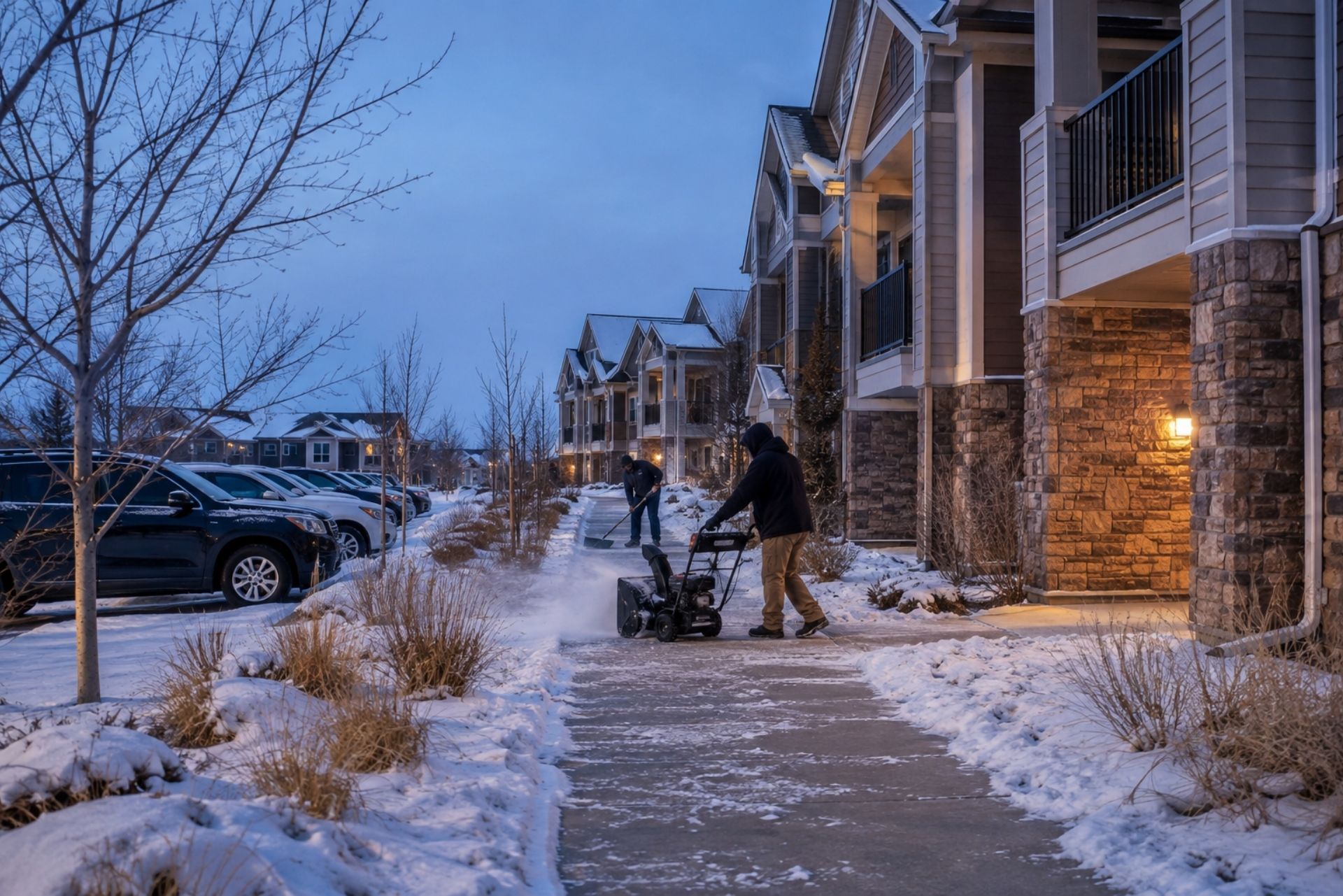
Pools, clubhouses, parking garages, elevators, landscaping, and walkways all fall under the master policy's property coverage. If a visitor slips on an icy sidewalk outside the lobby, the association's insurance responds, not the nearest unit owner's.
One area boards often overlook is infrastructure that sits between units: shared plumbing stacks, HVAC ductwork running through common chases, and electrical panels serving multiple units. These components are the association's responsibility under most governing documents, and your master policy needs to reflect that. Failing to insure them properly creates coverage gaps that surface at the worst possible time.

By: John Jacquat
Founder & President
Essential Liability Protection for Board Members
Liability exposure is the silent risk most boards underestimate. Property damage gets attention because it's visible, but a single lawsuit from an injured guest or a disgruntled owner alleging mismanagement can cost far more than a roof replacement.
Directors and Officers (D&O) Insurance
Board members volunteer their time. They shouldn't have to risk their personal assets doing it. D&O insurance protects directors and officers against claims of wrongful acts in their management capacity: things like alleged failure to maintain the property, discriminatory enforcement of rules, or mishandling of association funds.
Without D&O coverage, recruiting competent board members becomes nearly impossible. Colorado courts have seen cases where individual directors were held personally liable for decisions made in good faith. Your D&O policy should cover legal defense costs even if the allegations turn out to be baseless, because defense alone can run $50,000 or more. Review your policy limits to ensure they match your association's actual exposure, not just a default amount from five years ago.
General Liability for Guest Injuries
General liability covers bodily injury and property damage claims from third parties: residents' guests, delivery drivers, contractors, and anyone else on association property. A child breaks an arm on a playground structure. A contractor trips over a broken step. These are the claims that hit most frequently.
Your policy should carry at least $1 million per occurrence with a $2 million aggregate, though larger communities with amenities like pools or
fitness centers often need higher limits. An
umbrella policy layered on top provides extra protection for catastrophic claims. Don't skip it just to save a few hundred dollars per year on assessments.
Comparison of Standard vs. Comprehensive Master Policies
Choosing between a basic and comprehensive master policy affects every unit owner in your community. Here's how the two approaches stack up:
| Feature | Standard Policy | Comprehensive Policy |
|---|---|---|
| Building Structure | Exterior walls, roof, foundation | Full structure including original interiors |
| Common Areas | Covered | Covered |
| Interior Unit Finishes | Not covered (owner's responsibility) | Original finishes covered |
| Owner Improvements | Not covered | Not covered |
| Liability | Basic GL included | GL + umbrella often bundled |
| D&O Coverage | Separate purchase required | Often included or bundled |
| Crime/Fidelity Bond | May not be included | Typically included |
| Ordinance or Law | Rarely included | Usually included |
| Typical Annual Cost | Lower assessments | 15-30% higher assessments |
The comprehensive approach costs more upfront but reduces confusion during claims and minimizes gaps between the master policy and individual HO-6 policies. For associations with older buildings or complex shared systems, comprehensive coverage often pays for itself after a single major claim.
Addressing Local Hazards and Colorado Requirements
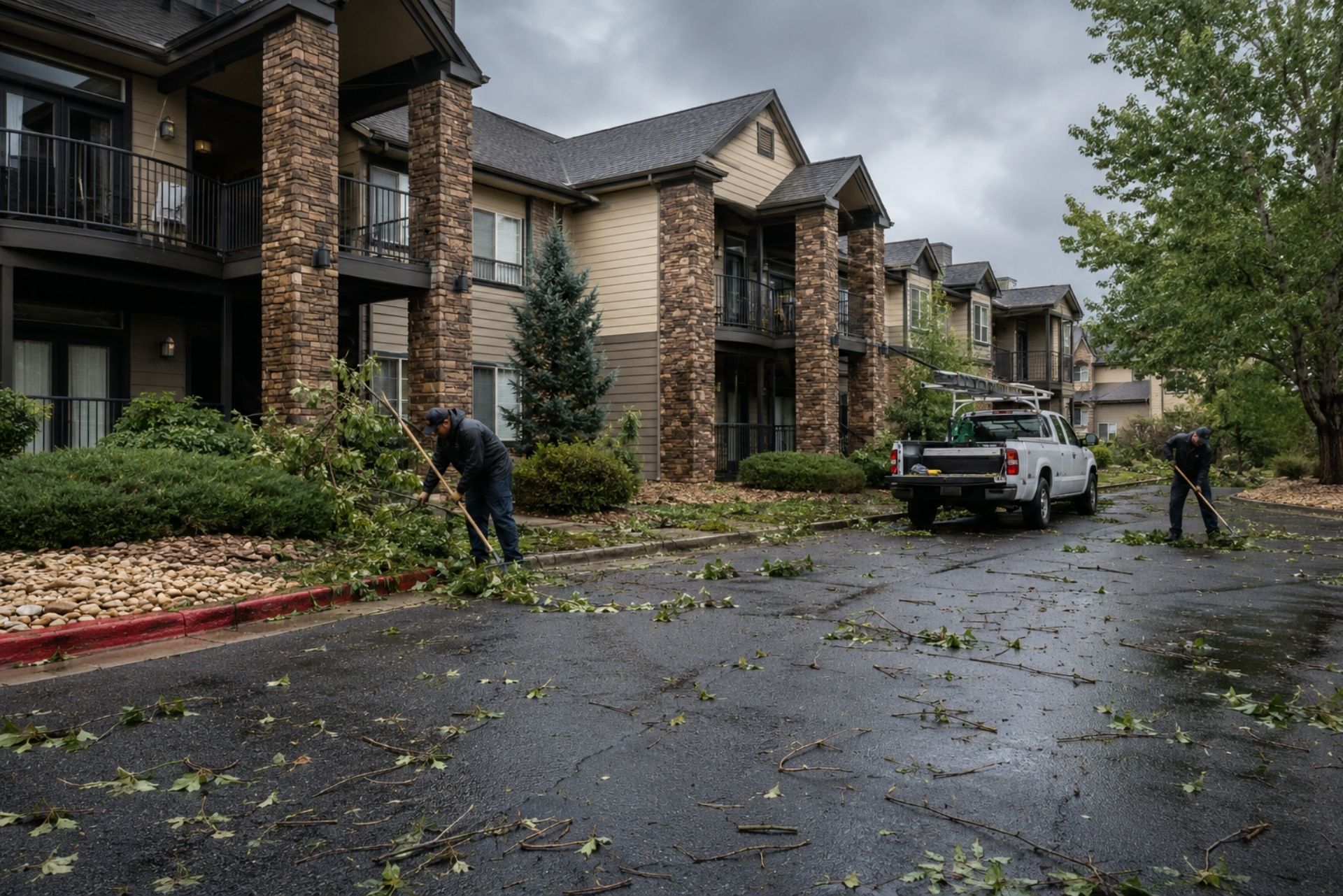
Thornton sits in one of the most hail-prone corridors in the country. The city also enforces updated building codes that can significantly increase reconstruction costs after a loss. Both factors demand specific insurance provisions that generic policies from out-of-state carriers sometimes miss.
Colorado legislators have been working on measures to make property insurance more affordable for homeowners and associations, but premiums remain high. Your board's job is to make sure every dollar spent on insurance actually covers the risks your community faces.
Wind and Hail Damage Deductibles
Here's where many Thornton associations get caught off guard. Most property policies in Colorado now carry separate wind and hail deductibles, often expressed as a percentage of the building's insured value rather than a flat dollar amount. A 5% wind/hail deductible on a $10 million building means $500,000 out of pocket before insurance kicks in.
That's a massive special assessment waiting to happen. Some associations buy "deductible buy-down" endorsements that reduce the percentage deductible to a flat amount, say $25,000 or $50,000. Others build reserve funds specifically earmarked for deductible costs. The worst strategy is ignoring the issue until a storm hits. Your board should know the exact deductible amount for every peril covered under your master policy and have a written plan for funding it.
Thornton's building permits and inspections division enforces current codes on any substantial repair or reconstruction, which brings us to the next critical coverage.
Ordinance or Law Coverage
When a building suffers major damage, local codes often require that repairs meet current standards, not the standards in place when the building was originally constructed. For a 1990s-era condo complex, that might mean upgraded electrical panels, improved insulation, ADA-compliant common areas, or modern fire suppression systems.
Standard property policies pay to restore the building to its pre-loss condition. They don't pay for code upgrades. Ordinance or law coverage fills that gap. Without it, your association absorbs the difference, which can easily add 20-40% to reconstruction costs on older buildings.
This coverage typically includes three components: coverage for the loss in value of the undamaged portion of a building that must be demolished, the cost of demolishing and clearing that undamaged portion, and the increased cost of construction to meet current codes. Make sure all three are included in your policy, not just one or two.
Frequently Asked Questions About Thornton Condo Insurance
Do individual unit owners still need their own insurance if the association has a master policy? Yes. The master policy doesn't cover personal belongings, liability inside your unit, or improvements you've made. An HO-6 policy fills those gaps and typically costs $200-$500 per year.
How much D&O coverage does our board need? Most associations carry $1 million in D&O coverage. Larger communities or those with active litigation history should consider $2-$5 million. The cost difference is usually modest.
What is a fidelity bond, and does our association need one? A fidelity bond (crime coverage) protects the association if someone with access to funds, like a board treasurer or management company employee, steals money. Colorado HOA laws require associations to carry fidelity coverage, and recent legislative updates have reinforced board financial accountability.
Can we reduce our premiums by increasing our deductible? You can, but proceed carefully. A higher deductible lowers your premium but increases out-of-pocket costs after a loss. Make sure your reserves can actually cover the deductible before raising it.
Does our master policy cover flooding? Almost certainly not. Standard master policies exclude flood damage. If your community sits in or near a flood zone, you'll need a separate flood policy through the NFIP or a private carrier.
How often should we review our master policy? Annually, at minimum. Review it any time you complete major renovations, add amenities, or see significant changes in your building's replacement cost. Insurance that matched your needs three years ago may have serious gaps today.
Where can we compare Thornton-specific insurance options? Start by getting quotes from agents who specialize in Colorado condo association coverage. Local brokers familiar with
Thornton's insurance market can often find better rates than national carriers unfamiliar with Front Range risks.
Making the Right Choice for Your Association
Getting condo association insurance right in Thornton requires more than picking the cheapest quote. Your board needs to understand the interplay between building coverage, liability protection, D&O and crime policies, ordinance or law provisions, and the deductibles that determine how much you'll pay out of pocket after a claim.
Start with your governing documents. They dictate minimum coverage requirements and define what the association insures versus what falls to individual owners. Then audit your current policy against those requirements, paying close attention to wind and hail deductibles, code upgrade coverage, and whether your liability limits still match your community's size and risk profile.
Colorado's insurance market isn't getting cheaper anytime soon. The associations that weather rising costs best are the ones that buy strategically: covering real risks, eliminating gaps, and building reserves to handle deductibles. If your board hasn't reviewed your master policy in the last 12 months, put it on next month's agenda. The cost of getting it wrong is always higher than the cost of getting it right.
ABOUT THE AUTHOR:
John Jacquat
As President of Pure Risk Advisors, I’m dedicated to helping clients protect what matters most through clear, personalized insurance solutions. Since 2009, my focus has been delivering trusted coverage and guidance for individuals and businesses across Colorado and beyond.
The Pure Risk Process
Process of Working With A Business Insurance Agent in Colorado

Risk Analysis & Tailoring
Embark on a meticulous exploration of your business's unique vulnerabilities and aspirations. Pure Risk Advisors goes beyond mere coverage, ensuring you're equipped with solutions finely tuned to Colorado’s distinct business landscape.

Strategic Business Consultation
Dive deep into a strategic session with our seasoned specialists. By delving into your business model, aspirations, and challenges, we align our insurance recommendations not just to protect but to propel your business forward, keeping in mind Colorado’s intricate regulatory environment.

Swift Policy Integration
Upon discerning the optimal protection strategy, we streamline the activation process. Partnering with Pure Risk Advisors means more than just business insurance – it's about securing your enterprise's future with unmatched diligence and expertise in Colorado.
Pure Risk Advisors Team
Meet Our Colorado Professional Team Members
Meet the heart and soul of Pure Risk Advisors: our exceptional team. Each individual has been meticulously selected not just for their deep-rooted industry knowledge, but for their passion and commitment to genuinely serve our clients.
We pride ourselves on forging more than just business transactions; we build relationships. Our team doesn't see you as just another policy number. Instead, they view every interaction as a partnership, crafting solutions that resonate with your unique needs.
Dive in, get to know us, and discover firsthand why our team makes all the difference.



Client Testimonials
Amazing Feedback About Pure Risk Advisors


In today’s insurance marketplace, innovation and originality are important - but unless they’re accompanied by integrity and personalized service, they do little to accomplish a club owner’s goals. ACE National is proud to recognize John Jacquat and his company, Pure Risk Solutions, as one of our top-ranked premier industry providers. John has consistently mastered achievement in leadership, creating the best product for a client’s needs and following through on his word. I can recommend Mr. Jacquat without reserve if you’re in the market for club insurance.
Angelina Spencer
Executive Director of Ace National
Business Insurance Coverage in Colorado
Commercial Insurance Options
Business Owner's Policy
Coverage for property damage, liability, and business interruption combined.
General Liability Insurance
Protects against business liabilities like bodily injury and property damage.
Workers' Comp. Insurance
Covers employee injury costs, ensuring business and worker protection.
Professional Liability Insurance
Guard against professional mistakes, negligence, or services rendered failures.
Commercial Property Insurance
Broad protection against business-related injuries or property damage claims.
Commercial Auto Insurance
Coverage for business vehicles against damage, injury, or liability.
We've been serving Colorado Business Since 2009
Industries Served
Latest News & Blog
Read Our Latest Articles