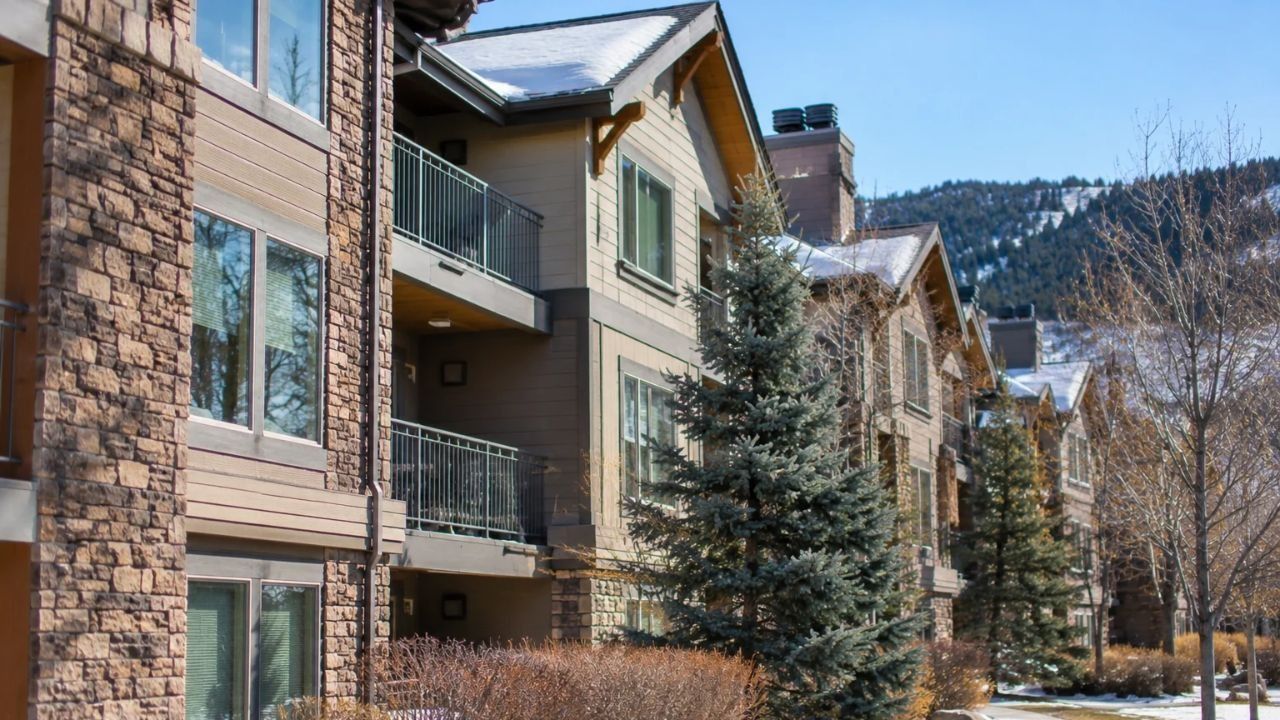
Colorado Condo Association Water Damage Insurance
9:00am - 5:00pm Mon-Fri
We'll Reply in 15min*
Picture a burst supply line on the fourth floor of a Lakewood condo building in January. By morning, water has worked through two ceilings, a hallway, and the electrical room. Now three unit owners, a property manager, and at least two insurance carriers are all asking the same question: who pays?
That scenario plays out across Colorado every winter. It rarely resolves cleanly because condo water losses sit where the association's master policy, each owner's HO-6 policy, and the governing documents overlap. Get the coverage structure wrong, and a routine pipe failure can turn into a five-figure assessment landing on your doorstep.
This guide covers how condo association water damage insurance works in Colorado: pipes, roof leaks, unit damage, deductibles, sublimits, and the claims process that ties them together. We'll focus on the details that cause real disputes, such as deductible allocation, bare walls language, and water sublimits buried on page 40 of a master policy. You'll also find the 2026 lending and legislative changes boards need to account for.
The goal is practical. If you sit on a board, manage a community, or own a unit, you should finish this with a clear list of what to check, what to ask your agent, and what to fix before the next freeze.
Understanding Water Damage Risks in Colorado Condos
Colorado's climate is rough on plumbing and roofs. Front Range buildings swing from 60°F afternoons to single-digit nights within a day, and that cycle stresses pipes in exterior walls, unheated garages, and attic spaces. Mountain communities face longer freezes and heavy snow loads that create ice dams along eaves.
Industry data puts water damage and freezing at roughly 22.6% to 29.4% of all property claims, with average payouts climbing to about $15,400 in 2026. In a multi-unit building, that average understates the risk. One failure rarely affects only one unit, so a single event can generate several claims at once.
The most common sources we see in Colorado condo losses include:
- Frozen and burst pipes in exterior walls, crawl spaces, and fire sprinkler lines
- Ice dams and roof leaks after heavy snow, especially on low-slope roofs
- Appliance failures such as water heaters, washing machine hoses, and dishwasher supply lines
- Hail-damaged roofing that leaks slowly for months before anyone notices
- Sewer and drain backups, which standard policies often exclude without an endorsement
Here's the insider piece: the costliest losses are usually slow leaks, not dramatic bursts. A pinhole leak behind a shower wall can run for weeks, and many policies exclude "continuous or repeated seepage" over 14 days. That exclusion catches owners off guard more than almost any other provision.
Cost pressure adds to the problem.
Colorado homeowners' insurance costs rose about 100.8% between 2020 and 2025, pushing the average 2026 premium to roughly $4,310. Master policy premiums followed a similar path, and associations responded by raising deductibles. That shift moved more water risk onto individual owners.

By: John Jacquat
Founder & President
The Master Policy vs. Unit Owner Policy (HO-6)
Every Colorado condo water loss involves two layers of coverage. The association's master policy insures the building and common elements. Each owner's HO-6 policy covers what the master policy doesn't, plus personal property and liability.
The Colorado Common Interest Ownership Act (CCIOA) requires associations to carry property insurance on common elements. But the exact boundary between "association property" and "unit owner property" comes from your declaration, not the statute. That's why two buildings on the same street can have very different coverage splits.
Bare Walls vs. All-In Coverage Models
Master policies generally follow one of three models, and you need to know which one your building uses.
| Coverage Model | What the Master Policy Covers | What the HO-6 Must Cover |
|---|---|---|
| Bare walls | Structure, framing, exterior, common areas | Drywall, flooring, cabinets, fixtures, improvements |
| Single entity (original specs) | Structure plus interior finishes as originally built | Upgrades and betterments added later |
| All-in | Structure, original finishes, and owner upgrades | Personal property, liability, loss assessment |
The common mistake is buying an HO-6 with $25,000 in dwelling coverage in a bare walls building. A kitchen and two bathrooms can cost far more than that to rebuild after a soaking. If your unit has quartz counters or engineered hardwood the developer didn't install, your HO-6 dwelling limit has to reflect those upgrades, even under a single entity model.
Determining Responsibility for Pipe Bursts and Roof Leaks
Responsibility usually turns on two questions: where the water came from, and where the damage landed. Many declarations assign maintenance of pipes serving only one unit to that owner, while pipes serving multiple units are common elements.
Roof leaks are typically the association's responsibility because the roof is a common element. That said, interior damage from a roof leak may still fall under the unit owner's HO-6 if the declaration says interior finishes belong to owners. Negligence changes the picture too. If an owner shuts off the heat to a vacant unit and pipes freeze, the association may be able to pass costs to that owner, which we'll cover below.
One thing to keep in mind: insurance coverage and maintenance responsibility aren't the same thing. Your declaration might make an owner responsible for maintaining a water heater, yet the master policy may still respond to resulting building damage. Read both documents together.
Comparison: Common Property vs. Individual Unit Damage
The fastest way to settle the "who pays" question is mapping each damaged item to its owner and its insurer. Boards that do this in writing before a loss cut weeks off the claim timeline.
Here's a typical breakdown for a Colorado building using a single entity master policy. Your declaration controls, so treat this as a starting framework, not a rule.
| Damaged Item | Usually Owned By | Primary Coverage | Common Dispute |
|---|---|---|---|
| Roof, siding, exterior walls | Association | Master policy | Wear and tear vs. sudden damage |
| Common hallways, stairwells | Association | Master policy | Rarely disputed |
| Pipes inside shared walls | Association | Master policy | Whether pipe serves one or multiple units |
| Original drywall and flooring | Varies by model | Master or HO-6 | Bare walls vs. single entity language |
| Owner upgrades and remodels | Unit owner | HO-6 | Whether upgrades were disclosed |
| Furniture, clothing, electronics | Unit owner | HO-6 | Never covered by master |
| Temporary housing | Unit owner | HO-6 loss of use | Owners often skip this coverage |
| Deductible shortfall | Varies | HO-6 loss assessment | Sublimits too low for the deductible |
Notice the last two rows. Loss of use and loss assessment are where owners discover gaps. If your unit is uninhabitable for six weeks while drying equipment runs and drywall gets replaced, the master policy won't pay your hotel bill.
Personal property is another blind spot. Renters in your building need their own policies, and landlord owners need HO-6 coverage written for a rental. A standard owner-occupied HO-6 on a rented unit can create coverage problems at claim time.
Managing High Deductibles and Water Damage Sublimits
Deductibles are where Colorado condo water claims get expensive. Many master policies now carry $25,000, $50,000, or higher deductibles for all perils. Some also apply separate water damage deductibles or percentage-based wind and hail deductibles.
Percentage deductibles hurt most. Wind and hail deductibles running from 1% to 5% could cost the owner of a $400,000 unit somewhere between $4,000 and $20,000 out of pocket. When hail damages a roof and the roof then leaks, the question of which deductible applies can become a real fight.
Lenders are setting limits. Fannie Mae's master policy requirements now cap per-unit deductibles for property insurance at $50,000. If your master policy exceeds that, buyers using conventional loans may struggle to close, which affects every owner's resale value.
Watch for water damage sublimits too. Some carriers cap water losses at a set dollar amount per occurrence, regardless of the building limit. A $10 million master policy with a $250,000 water sublimit won't fully respond to a sprinkler line failure that floods three floors.
The Impact of Colorado's Senate Bill 22-006
Boards often discuss deductible rules under the Senate Bill 22-006 label, but the practical authority you'll work with sits in CCIOA itself. Colorado associations have statutory authority to adopt written policies allocating deductible costs to negligent owners or to owners who benefit from a repair, under § 38-33.3-313(6).
The key word is "written." Without an adopted policy, boards have little footing to bill an owner whose overflowing bathtub damaged three units. Here's what that means for you as a board member: adopt the policy, give owners notice, and apply it consistently. An unevenly enforced policy invites legal challenges.
Transparency rules are tightening as well. Under HB25-1322, insurers must provide a certified copy of an association's policy within 30 days of a written request or face a $50-per-day penalty. Use that right before renewal so you know exactly what sublimits and exclusions apply.
Loss Assessment Coverage for Unit Owners
Loss assessment coverage on your HO-6 pays your share when the association assesses owners for a deductible or uninsured loss. Many policies default to $1,000, which barely makes a dent in a $50,000 master deductible.
The catch is that some carriers limit how much loss assessment applies to a deductible specifically, often less than the full limit. Ask your agent for the deductible-specific sublimit in writing. Then match your coverage to the worst-case number in your declaration.
The Anatomy of a Colorado Condo Water Claim
A condo water claim moves through predictable stages: discovery, mitigation, notice, inspection, coverage determination, and repair. Problems almost always start in the first 48 hours.
Recent litigation shows how cause-of-loss arguments drive outcomes. In one case, a condo association sued six insurers after they allegedly denied payment by pointing to the wrong cause. Water claims follow the same pattern. Carriers may argue long-term seepage, wear and tear, or faulty workmanship instead of a sudden, accidental discharge.
Immediate Mitigation and Documentation Steps
Your policy requires reasonable steps to prevent further damage. Delays give carriers grounds to reduce payment. Follow this order:
- Stop the water. Shut off the unit valve or building main. Every owner should know where these are.
- Notify the property manager and affected neighbors immediately, in writing if possible.
- Photograph and video everything before cleanup, including the source, ceilings, floors, and personal property.
- Call a mitigation contractor to extract water and set drying equipment. Keep moisture readings.
- Save failed parts. A cracked supply line or failed fitting is evidence for cause and possible subrogation.
- Report to your carrier promptly, even if you think the master policy will respond.
Don't throw away damaged flooring or cabinets until the adjuster approves it. Keep samples.
Navigating Multi-Party Insurance Adjustments
When water crosses unit lines, expect multiple adjusters with conflicting interests. The master carrier, each HO-6 carrier, and possibly a plumber's liability insurer will all want to limit their share.
Appoint one point of contact for the association, usually the manager. Share a single timeline and photo set with every carrier. This matters because inconsistent stories between owners and the board give adjusters room to dispute cause and timing.
Subrogation often follows. If a contractor's faulty installation caused the leak, the paying carrier may pursue that contractor, and your recovered deductible may come back months later.
Preventing Claims Through Maintenance and Smart Tech
The cheapest water claim is the one that never happens. Associations with documented maintenance programs also get better renewal terms, since underwriters increasingly ask for proof of prevention.
Start with a seasonal schedule. Before the first hard freeze, usually by mid-October on the Front Range, inspect roof drains, clear gutters, winterize irrigation, and check heat tape. Check heat in garages and mechanical rooms that house sprinkler risers.
Smart water technology has become a strong underwriting tool:
- Automatic shutoff valves on the building main or individual units detect abnormal flow and close the supply
- Leak sensors under water heaters, sinks, and washers send alerts to owners and managers
- Low-temperature sensors in vacant units and exterior wall cavities warn before pipes freeze
- Roof moisture monitoring on flat roofs catches leaks before they reach interiors
Some boards require shutoff devices through a rule amendment and share costs. Others offer bulk purchasing discounts. Either way, document installations and share them with your broker at renewal.
Reserves play a role too. Federal lending guidelines updated in 2026 require Colorado associations to allocate at least 15% of their budget to reserves unless they have a reserve study less than three years old. Underfunded reserves mean deferred roof and plumbing replacement, and deferred replacement means more water claims.
Owners have a part in prevention. Keep the heat at 55°F or higher when traveling, replace rubber washer hoses with braided steel, and tell the manager if you'll be gone more than a few days in winter.
Common Questions About Condo Water Insurance
Does my HOA's master policy cover water damage inside my unit? It depends on your declaration. Under a bare walls policy, interior finishes are yours to insure, while single entity and all-in policies cover more.
Who pays if my neighbor's pipe floods my condo? Usually the master policy handles building damage, subject to its deductible, and your HO-6 covers your belongings. If your neighbor was negligent, the association may pass the deductible to them under a written allocation policy.
How much loss assessment coverage should I buy? Match it to your master policy's highest deductible or your share of it. Many owners carry $1,000 when they need $25,000 or more.
Is sewer backup covered? Often not. Most policies require a separate water backup endorsement, so check both the master policy and your HO-6.
Will slow leaks be covered? Many policies exclude seepage that continues over a set period, often 14 days. Fix drips quickly and document repairs.
Are Colorado insurance costs still rising?
Yes, and a new fee is coming. Starting in 2027, a
0.5% fee will apply to multiperil homeowner premiums to fund the Strengthen Colorado Homes Enterprise.
Protecting Your Investment Long-Term
Water losses in Colorado condos follow patterns. Freeze cycles, ice dams, aging supply lines, and high deductibles combine in ways you can predict and plan around. The buildings that handle claims well have done three things: they've read their declaration alongside the master policy, adopted a written deductible allocation policy, and made sure owners carry HO-6 limits that match the actual risk.
For boards, request the certified policy copy, confirm your deductible stays within lender limits, and review water sublimits before renewal. For owners, pull your HO-6 declarations page tonight and compare your dwelling and loss assessment limits to your association's deductible.
No guide replaces your own documents, and specific declarations can override general rules described here. Still, if you take one step this month, schedule a joint review with your board and broker before winter. A single conversation now can prevent a five-figure surprise later.
ABOUT THE AUTHOR:
John Jacquat
As President of Pure Risk Advisors, I’m dedicated to helping clients protect what matters most through clear, personalized insurance solutions. Since 2009, my focus has been delivering trusted coverage and guidance for individuals and businesses across Colorado and beyond.
The Pure Risk Process
Process of Working With A Business Insurance Agent in Colorado

Risk Analysis & Tailoring
Embark on a meticulous exploration of your business's unique vulnerabilities and aspirations. Pure Risk Advisors goes beyond mere coverage, ensuring you're equipped with solutions finely tuned to Colorado’s distinct business landscape.

Strategic Business Consultation
Dive deep into a strategic session with our seasoned specialists. By delving into your business model, aspirations, and challenges, we align our insurance recommendations not just to protect but to propel your business forward, keeping in mind Colorado’s intricate regulatory environment.

Swift Policy Integration
Upon discerning the optimal protection strategy, we streamline the activation process. Partnering with Pure Risk Advisors means more than just business insurance – it's about securing your enterprise's future with unmatched diligence and expertise in Colorado.
Pure Risk Advisors Team
Meet Our Colorado Professional Team Members
Meet the heart and soul of Pure Risk Advisors: our exceptional team. Each individual has been meticulously selected not just for their deep-rooted industry knowledge, but for their passion and commitment to genuinely serve our clients.
We pride ourselves on forging more than just business transactions; we build relationships. Our team doesn't see you as just another policy number. Instead, they view every interaction as a partnership, crafting solutions that resonate with your unique needs.
Dive in, get to know us, and discover firsthand why our team makes all the difference.



Client Testimonials
Amazing Feedback About Pure Risk Advisors


In today’s insurance marketplace, innovation and originality are important - but unless they’re accompanied by integrity and personalized service, they do little to accomplish a club owner’s goals. ACE National is proud to recognize John Jacquat and his company, Pure Risk Solutions, as one of our top-ranked premier industry providers. John has consistently mastered achievement in leadership, creating the best product for a client’s needs and following through on his word. I can recommend Mr. Jacquat without reserve if you’re in the market for club insurance.
Angelina Spencer
Executive Director of Ace National
Business Insurance Coverage in Colorado
Commercial Insurance Options
Business Owner's Policy
Coverage for property damage, liability, and business interruption combined.
General Liability Insurance
Protects against business liabilities like bodily injury and property damage.
Workers' Comp. Insurance
Covers employee injury costs, ensuring business and worker protection.
Professional Liability Insurance
Guard against professional mistakes, negligence, or services rendered failures.
Commercial Property Insurance
Broad protection against business-related injuries or property damage claims.
Commercial Auto Insurance
Coverage for business vehicles against damage, injury, or liability.
We've been serving Colorado Business Since 2009
Industries Served
Latest News & Blog
Read Our Latest Articles